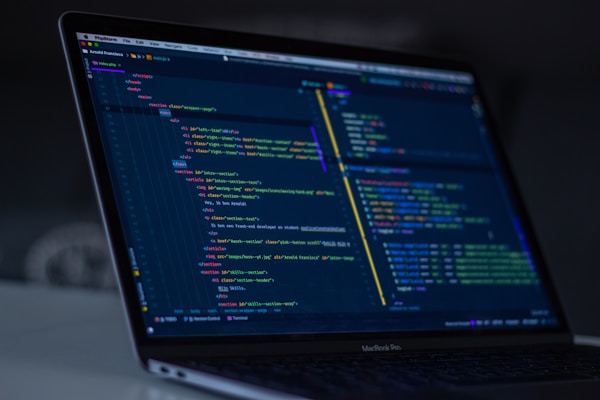
Getting Started with PEFT Library
Step-by-step tutorial for implementing LoRA using Hugging Face's Parameter-Efficient Fine-Tuning library.
Read Guide →Discover the best tools, frameworks, and libraries for parameter-efficient fine-tuning
Browse Tools
LoRA Link is your comprehensive directory for Low-Rank Adaptation tools, frameworks, libraries, and implementation resources. We curate and maintain an up-to-date collection of the best resources for parameter-efficient fine-tuning, helping researchers and developers find exactly what they need to implement LoRA in their projects.
From PyTorch libraries to Hugging Face integrations, from research papers to production-ready frameworks, we link you to the most valuable resources in the LoRA ecosystem. Our directory is continuously updated to include the latest tools and emerging solutions in parameter-efficient transfer learning.
State-of-the-art Parameter-Efficient Fine-Tuning library with native LoRA support, easy integration with transformers, and production-ready implementations.
Official Microsoft LoRA implementation in PyTorch, providing low-level control and customization for research and experimentation.
Easy-to-use fine-tuning framework with LoRA support for LLaMA, Mistral, and other popular language models.
Tools and resources for training custom LoRA models for Stable Diffusion image generation.
Lightweight library for implementing LoRA in custom PyTorch models with minimal code changes.
Automated hyperparameter tuning for LoRA, finding optimal rank and learning rates for your specific use case.
Step-by-step tutorial for implementing LoRA using Hugging Face's Parameter-Efficient Fine-Tuning library.
Read Guide →
Learn to implement LoRA in PyTorch from first principles, understanding every component.
Learn More →
Apply LoRA techniques to vision transformers for efficient image classification and segmentation.
Explore →LoRA Link is available in five languages so research teams across regions can collaborate without friction. Choose your preferred language to browse curated resources.
Complete coverage with weekly updates and deep-dive tutorials.
Fachartikel und Praxisleitfäden für DACH-Forschungsteams.
Guides et retours d'expérience pour les équipes IA francophones.
Strategie di fine-tuning per startup e laboratori di ricerca italiani.
Recursos localizados para comunidades de aprendizaje hispanohablantes.
Explore a continuously curated collection of implementation assets, benchmark notebooks, and production templates. Each resource is vetted for documentation quality and repository health.

Actionable notebooks covering PEFT, LoRAlib, and custom transformer adapters with environment setup instructions.
Browse Playbooks →
Comparative evaluations of LoRA, QLoRA, and adapter-based techniques across open-weight models from 7B to 70B parameters.
View Benchmarks →
Kubernetes-ready manifests, Triton inference examples, and cost calculators for shipping LoRA adapters to production.
Study Blueprints →
Instructor-led syllabi with slides, assessments, and certification rubrics for corporate LoRA adoption programs.
Download Curriculum →Accelerate your understanding of parameter-efficient fine-tuning with community lectures and practical walkthroughs selected for clarity and technical accuracy.
Mark Hennings breaks down rank selection, low-bit quantization, and optimizer choices for adapter training.
IBM Technology compares retrieval-augmented generation with LoRA-based adaptation using enterprise workloads.
NPTEL walks through the mathematics of adapter-based fine-tuning, highlighting LoRA's low-rank decomposition.
Follow a proven five-stage journey that teams use to launch and scale LoRA projects responsibly.
Quantify task-specific needs, label quality, and model baselines while validating licensing for training corpora.
Launch PEFT or LoRAlib notebooks, sweep ranks and alpha values, and log metrics with experiment tracking.
Compare adapter quality against control models, add safety classifiers, and perform red-team reviews.
Package adapters with quantized base models, design autoscaling policies, and document rollback plans.
Track live metrics, schedule drift detection, and plan quarterly adapter refresh cycles with stakeholder reporting.
See how leading teams apply LoRA to unlock faster iteration and lower infrastructure spend.
The Alpaca project demonstrated that a LLaMA 7B model can be aligned with instruction-following data for under USD 600 using LoRA adapters.
Read Technical Report →Original LoRA authors reported up to 10,000× parameter reduction while matching full fine-tuning quality on NLP benchmarks.
Access Paper →QLoRA compresses 65B-parameter models with 4-bit quantization, enabling fine-tuning on a single 48GB GPU without accuracy loss.
Explore QLoRA →We review newly released repositories every Friday and publish verified additions once documentation, licensing, and maintenance cadence are confirmed.
Adapters inherit the base model license. Always review both the upstream model card and the adapter repository before deploying in production.
Yes. Provide evaluation scripts, dataset references, and reproducibility notes via our contact form so we can validate and feature your results.